Antenna Tower Install — Part 1
The original plan was to install on the two-storey side of the side-split house — a spot where the upper section could have been climbed for maintenance. That plan changed: a hinge-base design was adopted instead, leaving a narrow section on the other side of the house where the tower could be lowered without hitting a tree.
One concern with the north side: all the target stations are to the south, meaning signals would arrive over 40+ feet of metal roof. The standard advice is that 10 feet above the roof eliminates diffraction issues — not entirely convincing in practice.
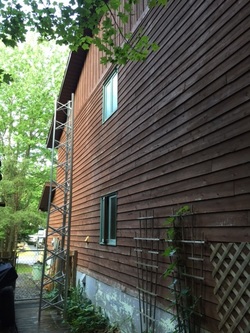
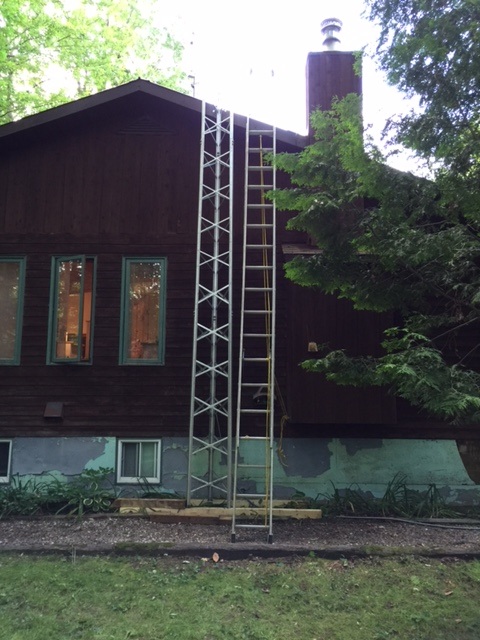
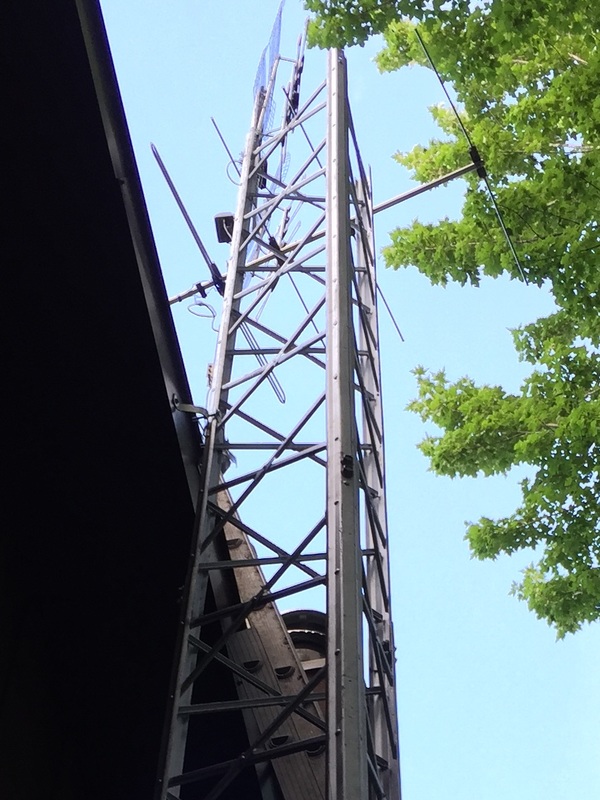
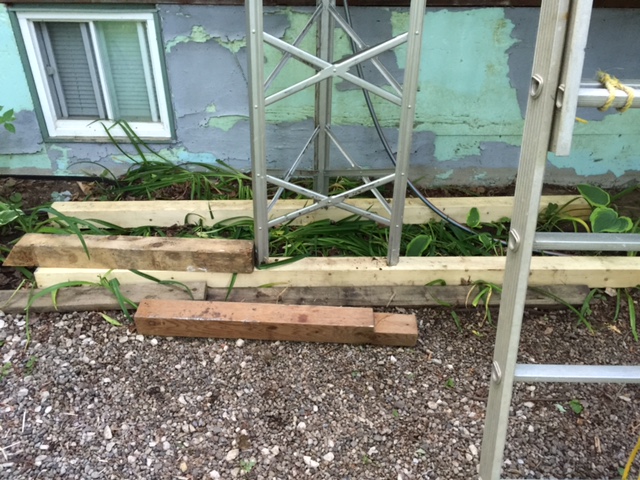
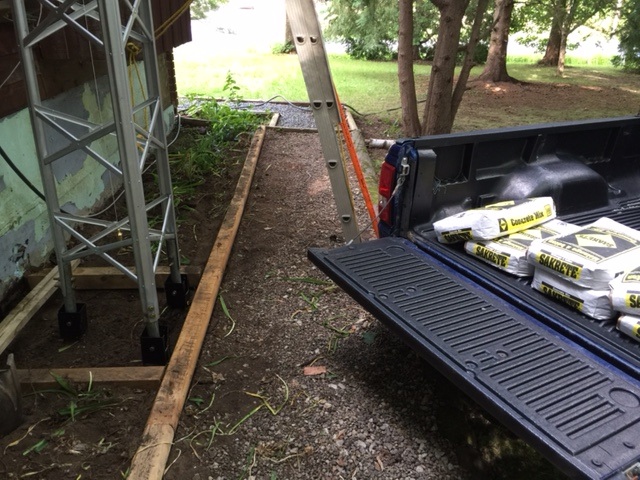
The first step was to manually push two sections up against the wall — three at once wasn't safe. The bottom two were "walked up," then the third section was carried up the ladder on the back. Surprisingly straightforward. The third section was attached to the eaves; whatever fascia material was used when the house was built, the tower ended up solidly anchored. Next step: dig out for the base.
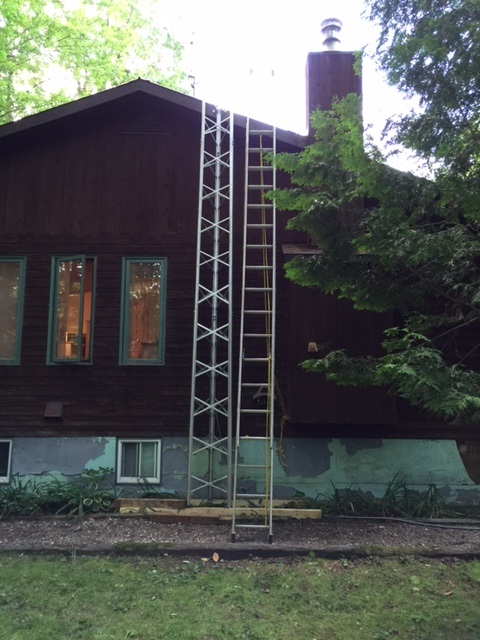
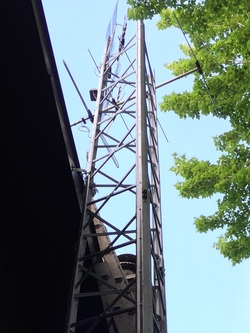
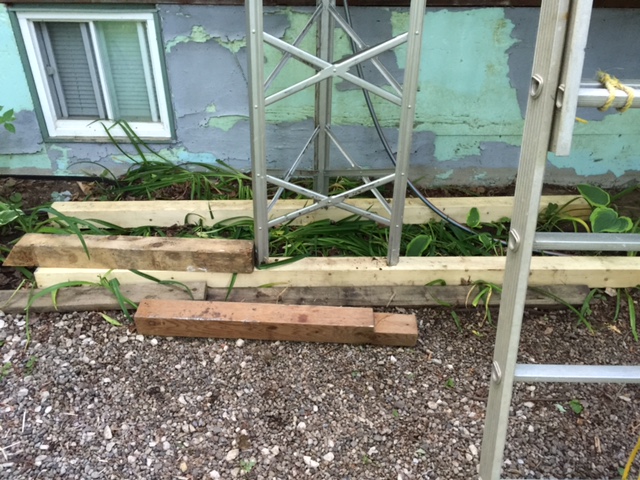
DMX HD-40 Tower — Overview
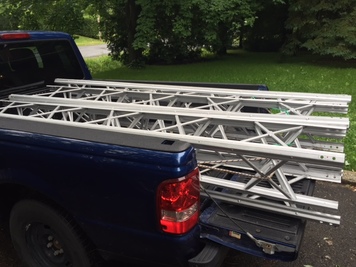
The DMX HD-40 is a premium Canadian-made freestanding guyed tower — 40 feet of solid construction designed for serious antenna installations. Selected for its quality, availability, and the ability to mount it on a custom hinge for easy lowering.
As Jeff has noted: "A man can never have too many projects."
Starting Setup
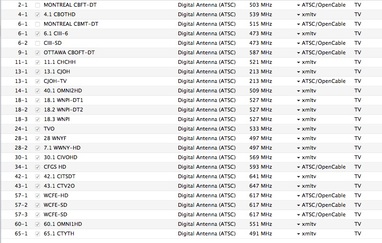
Ottawa sits just north of the US border. Getting CBS, FOX, PBS, ABC, MeTV, and NBC consistently requires height and the right antennas. Starting with two masts — Mast A for everyday reception and Mast B as a test bed — automated hourly DX scripts log what comes in around the clock. The goal: consolidate, add height, reduce house clutter.
The solution was a 40-foot DMX HD-40 — a premium Canadian-made freestanding tower that needs a concrete base.
Mast A — Primary Setup
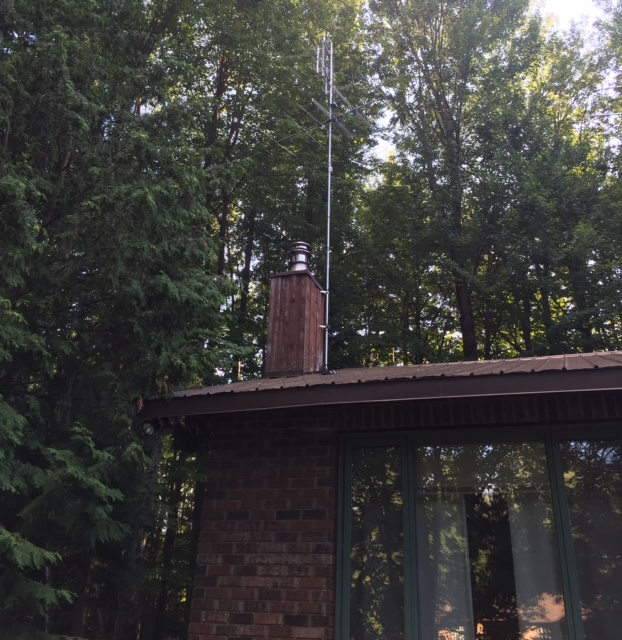
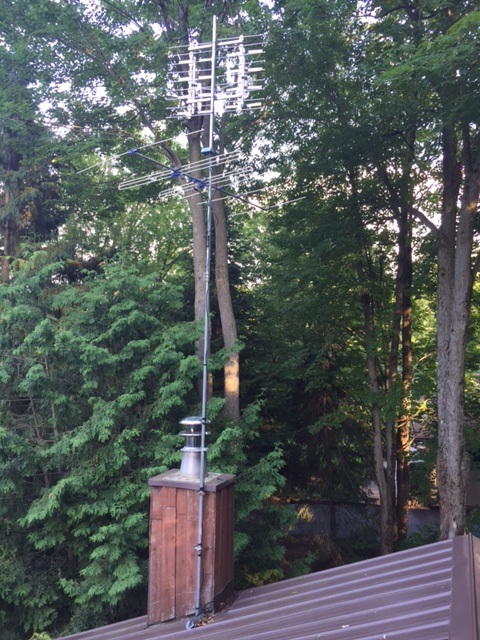
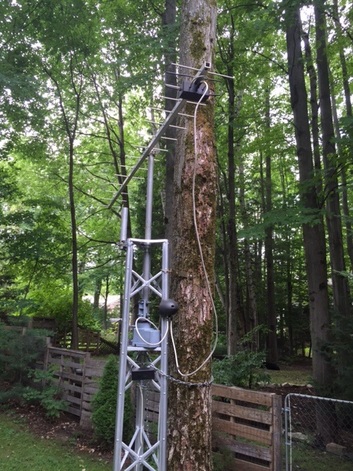
Mast A sits on the right side of the house. A Winegard HD8800 8-bay UHF antenna aims at South Colton, NY. A Wade/Delhi VHF-hi 6-element Yagi points at Watertown. Both feed through a dual-input Channel Master 7777 preamp.
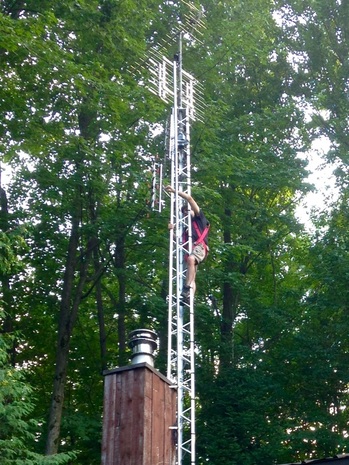
What makes it unusual: a hinge at the base so the entire 23-foot mast can be lowered for maintenance. The surrounding trees provide natural wind protection and the mast itself is commercial-grade — found at Cohen Brothers Recyclers in Ottawa, far heavier gauge than residential hardware.
Mast B — Test Bed
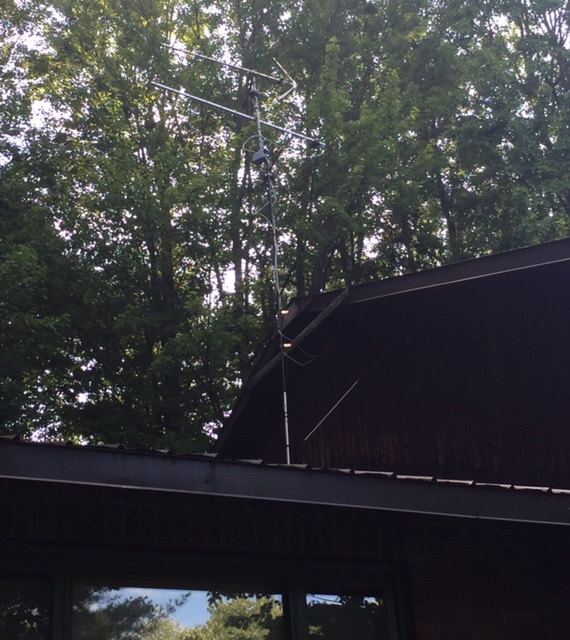
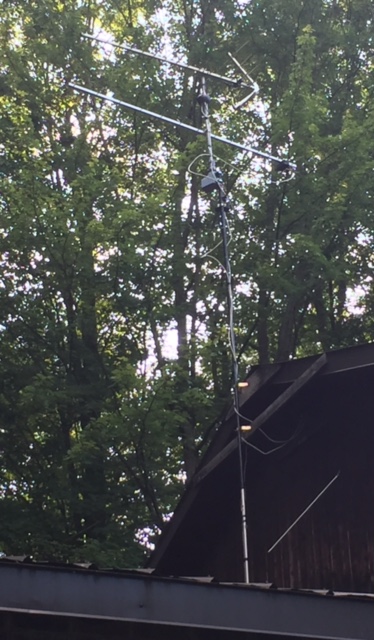
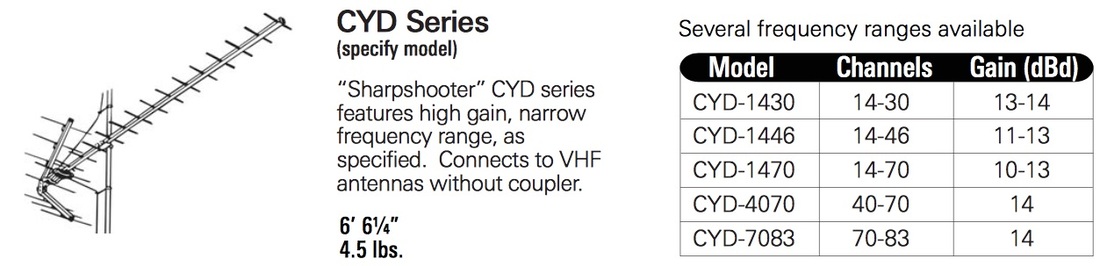
Mast B is a rotating test platform. On the rotor: a Delhi CYD-1430 UHF antenna at 38 ft (13–14 dBd / 15–16 dBi), and the homemade single-cut channel 21 Yagi (≈13.9 dBd / 16 dBi). The CYD-1430 runs through a CPA19 preamp directly to an HDHomeRun.
Custom Hinge Design
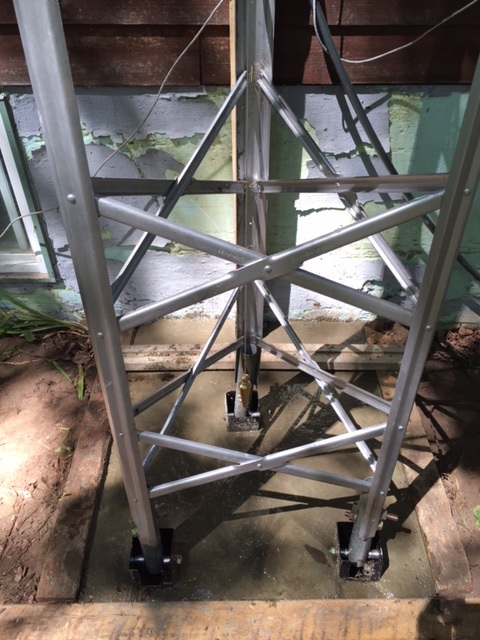
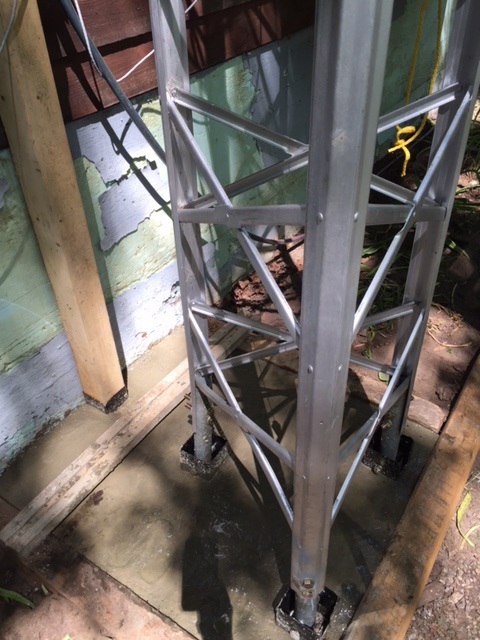
Commercial hinge stubs for the DMX run ~$600 retail. Instead: four Simpson EZ spikes (heavy-gauge, welded, from Preston Hardware Ottawa), short thick pipe sections, and Grade 8 hardware. Drive the spikes, mount the tower on the pipes, bolt through with 6× Grade 8 3.5"×0.5" bolts. The fourth spike anchors the winch post. Credit to forum user "mrvanwinkles" for the concept.
Concrete Base & Winch
A 3×3×4-inch concrete slab using six 30 kg bags locks the spikes against torsion. Kids' handprints mandatory. Plumb bob centred throughout.
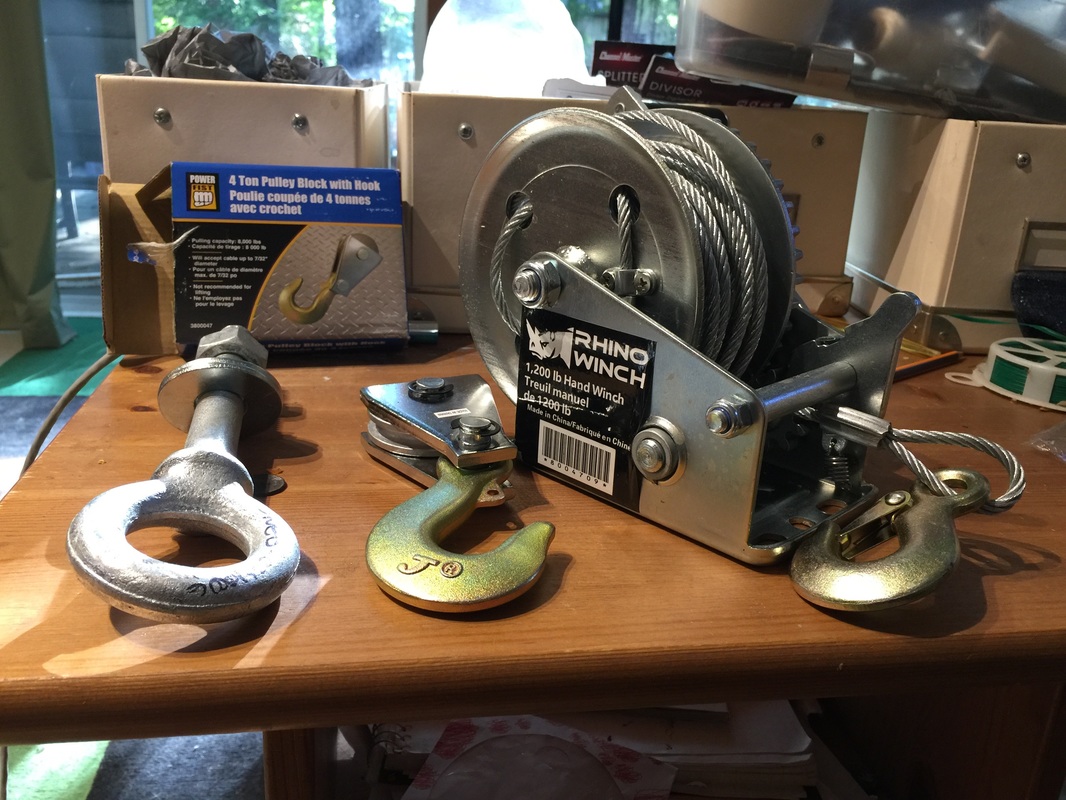
Winch system: 3/4" shoulder eye bolt (Ottawa Fastener), 1,200 lb winch + 4-ton pulley (Princess Auto). The bolt passes through the house's top plate — requires removing living room drywall. The cable attaches to the tower slightly above the pivot for clean mechanical advantage.
Final Configuration
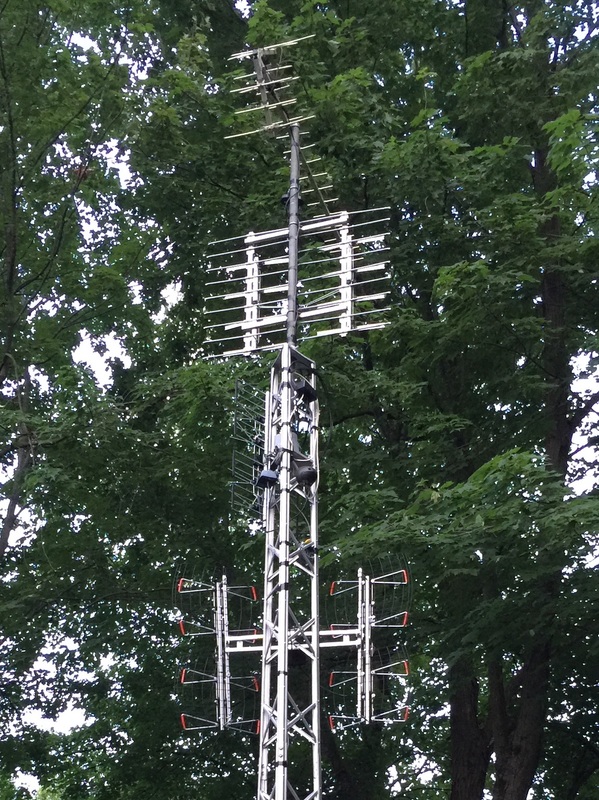
After trimming trees and simplifying the design, four antennas found their permanent positions: